
Roof Leak Repair in Elizabeth, NJ
A ceiling stain, a drip in the attic, water running down the wall every time it storms. Call to get connected with an independent local roofer who can trace the leak to where it actually starts and fix that spot.
Call (908) 555-0142Own the home or building? Note where the water shows up and when it happens (heavy rain, wind, snow melt) before you call.
Where is my roof leaking from?
The spot where you see water is usually not where it gets in. Use where the water shows up to narrow down the likely source:
| Where you see the water | Most likely entry point | What a roofer usually checks first |
|---|---|---|
| Ceiling stain in the middle of a room | Vent pipe boot, nail pop or failed shingles above | Rubber vent boots, exposed nails, shingles uphill of the stain |
| Stain on the ceiling near an outside wall | Gutter overflow, ice dam, drip edge | Gutters, eaves, the first rows of shingles |
| Water around the chimney | Chimney flashing or crown | Step and counter flashing, mortar joints, the crown |
| Water at a dormer or second-floor wall | Wall or step flashing | Where the roof meets the dormer siding |
| Leak at the porch ceiling or where a porch meets the house | Porch roof tie-in flashing | The joint where the porch roof meets the main wall |
| Drip around a skylight | Skylight flashing or seal | Flashing kit, the glass seal, condensation |
| Water near a bathroom or kitchen exhaust fan | Roof vent cap, or the fan venting into the attic | Vent caps on the roof, ductwork in the attic |
| Wet top-floor ceiling in a flat-roof building | Membrane seam, drain or parapet | Seams, drains, scuppers, parapet flashing |
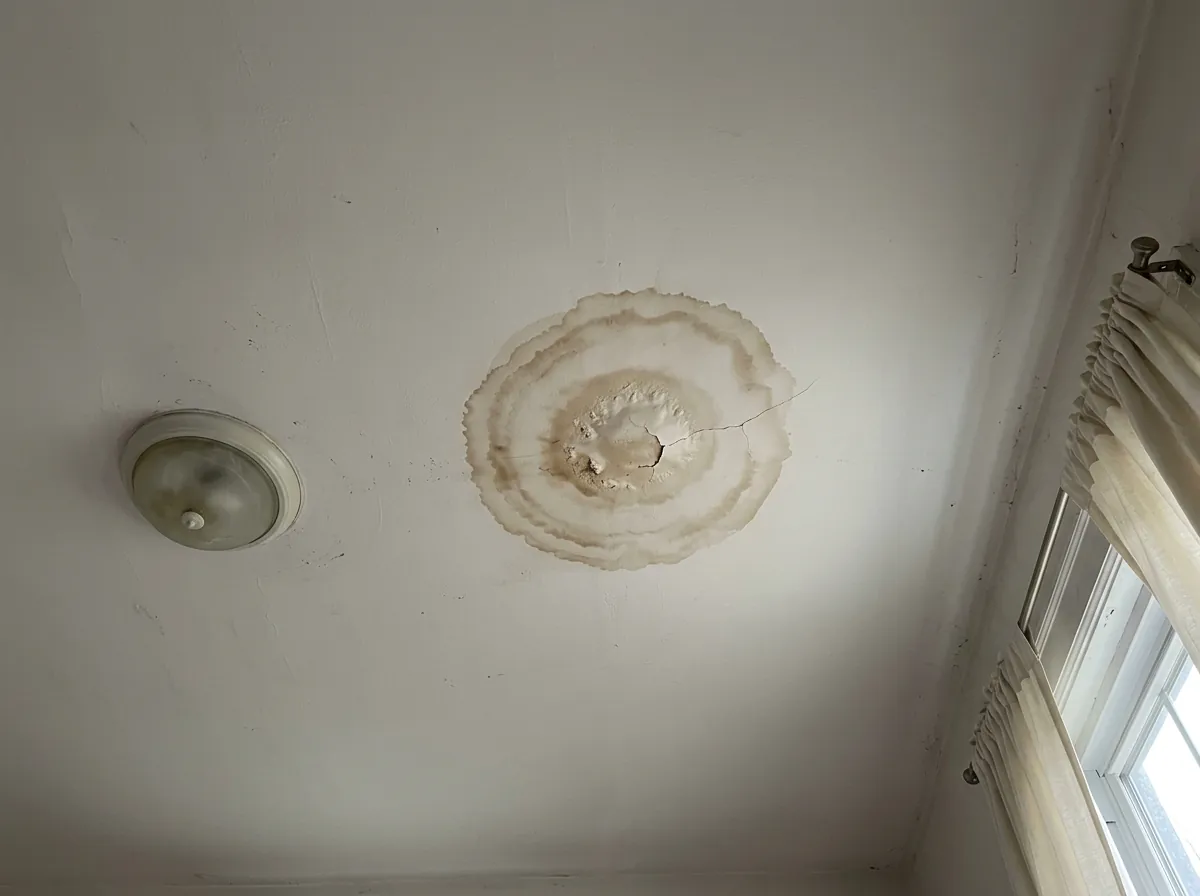
Why does the leak show up far from where water gets in?
Water rarely drips straight down. Once it gets under the shingles, it runs along the roof boards, the rafters or the top of the ceiling until it finds a low point or a gap, then drips. A leak at a vent pipe can show up as a stain several feet away. That’s why a good repair starts with finding the entry point, often from the attic, not with patching the spot above the stain.
What are the most common roof leak points on Elizabeth homes?
Most roof leaks start where the roof is interrupted, not in the middle of a plain shingle field. On Elizabeth’s older two-families, Cape Cods and rowhouses, these are the usual suspects:
- Vent pipe boots. The rubber collar around plumbing vents cracks with sun and age, and water runs down the pipe.
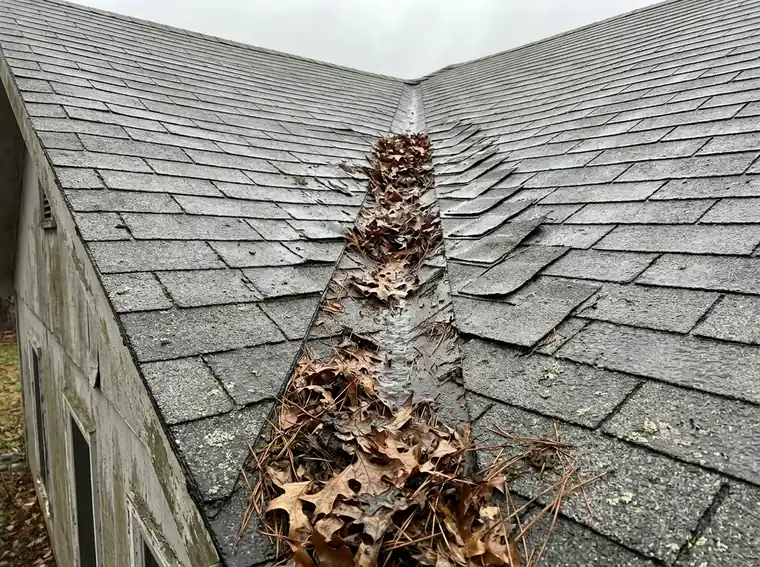
- Valleys. Where two roof slopes meet, water concentrates. Leaves and pine needles pile up, hold water and push it under the shingles.
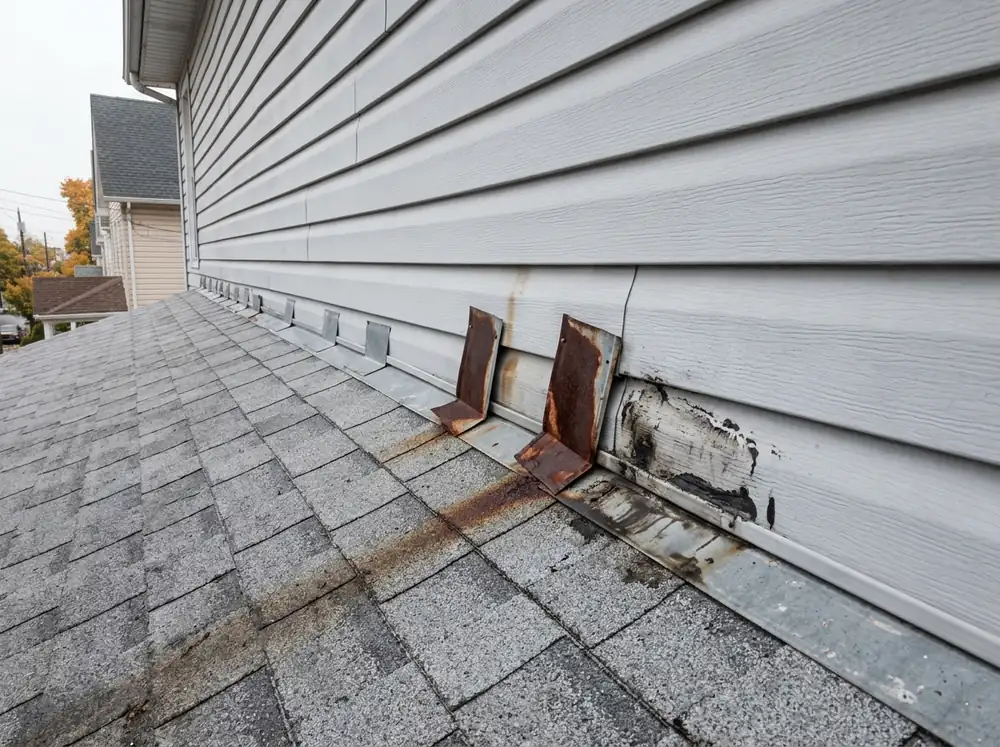
- Step and wall flashing. Where a roof meets a dormer, a second-story wall or a porch tie-in, the metal flashing rusts, lifts or was never woven in correctly.
- Chimney flashing and crowns. Common on older homes; see our chimney leak repair page.
- Nail pops and exposed nails. Nails backing out under a shingle let water follow them in.
- Shingle edges and the ridge. Wind lifts and tears shingles first at the edges and along the top.
- Ice dams at the eaves. Melting snow refreezes at the cold edge and backs water under the shingles.
- Porch roofs. Low-slope porch roofs on Elizabeth two-families collect leaves and leak where they meet the house.
Why does my roof only leak in certain weather?
When a leak only shows up in one kind of weather, the weather is a clue to the source:
| When it leaks | What it usually means |
|---|---|
| Only in heavy downpours | Valleys or gutters overflowing; water backing up faster than it drains |
| Only in wind-driven rain | Water pushed sideways under loose shingles or behind wall and step flashing |
| Only after snow, on mild days | Ice dams at the eaves, or snow melting around a chimney or vent |
| Every rain, even light | An open hole: missing shingle, cracked vent boot, failed flashing |
| On cold, dry days with no rain | Probably not a roof leak; attic condensation (see below) |
Write down the date, the weather and where it dripped each time. That record often saves a roofer time finding the source.
Is a ceiling water stain always a roof leak?
No. In top-floor rooms it often is, but several other problems leave the same brown ring. Before assuming the roof failed, consider:
- Plumbing: a bathroom or kitchen above the stain, or pipes in the ceiling.
- Air-conditioning condensation: an attic AC unit with a clogged drain line or overflowing pan.
- Attic condensation: warm, moist house air meeting cold roof boards in winter, often from poor ventilation or a bath fan that vents into the attic instead of outside. Frost on the nails and damp insulation in cold weather are the giveaway.
- Siding or window leaks: water entering a wall and running down to the ceiling below.
A roofer can usually tell from the attic whether water is coming through the roof. If it isn’t, that tells you to call a plumber or HVAC technician instead.
How do roofers find a roof leak?
A roofer finds a leak by working backward from the water. The usual steps are:
- Look inside first: the stain, the attic above it, and any wet wood, rusty nails or daylight showing through.
- Follow the water uphill: tracing stains on the rafters and roof boards to where they start.
- Inspect the roof outside: flashing, vent boots, valleys, shingles and sealant above that area.
- Check the usual suspects nearby: chimney, skylights, dormers, gutters.
- Water-test if needed: running a hose on one section at a time while someone watches inside, starting low and moving up.
Some roofers also use moisture meters or infrared cameras to see wet areas. Ask the roofer to show you photos of what they found.
What does a proper roof leak repair look like?
A proper repair replaces or reseals the part that failed. A bad patch smears sealant over the symptom. This is the difference to look for when the job is done:
| A proper repair | A bad patch |
|---|---|
| The failed part is replaced: new vent boot, new flashing, new shingles | Black roof cement or caulk smeared over the problem area |
| New flashing is tucked under the shingles above it and over the ones below | Flashing face-nailed or sealed only on top |
| Shingles match the roof’s layout and overlap correctly | Mismatched pieces laid flat on top of old shingles |
| Rotted roof boards under the leak are replaced | Soft decking left in place and covered over |
| The roofer shows you before-and-after photos | No photos, “trust me, it’s fixed” |
Roof cement has its place as a short-term fix in an emergency, but on its own it often fails within a season and can hide the real source. A patch that looks like a smear of tar is one of the most common complaints NJ homeowners post about online.
What should I do before the roofer arrives?
A few minutes of prep helps the roofer find the leak faster and protects your insurance claim:
- Trace the stain’s edge in pencil and write the date. If it grows, you’ll know the leak is active.
- Look in the attic with a flashlight, if you can get there safely. Put a bucket under any drip and note where the wet wood starts.
- Photograph everything: the stain, wet spots in the attic, anything damaged.
- Note the weather each time it leaks: heavy rain, wind, snow melt.
- Clear a path to the attic hatch and the area under the leak.
- Stay off the roof, especially when it’s wet, icy or steep.
Will homeowners insurance pay for a roof leak repair?
Usually only if the leak came from sudden damage, like wind tearing off shingles or a falling branch. Leaks from age, worn flashing or lack of maintenance are generally not covered. If storm damage caused your leak, take photos before any repair and see our storm damage roof repair page for how claims usually work in New Jersey.
A leak in a two-family: who’s affected?
In Elizabeth’s many two-family homes, a roof leak in the upstairs unit often shows up in the downstairs unit too, through ceilings, walls and light fixtures. If you’re the owner and a tenant reports a leak, act quickly and keep a written record: New Jersey landlords must keep rental units fit to live in. More on landlord duties on our roof repair in Elizabeth page.
Roof leaks by Elizabeth neighborhood
| Neighborhood | Common housing | Where leaks often start |
|---|---|---|
| Elmora | Two-families with stacked porches | Porch roof tie-ins, valleys, vent boots |
| North End | Tudors, Colonials, some slate | Slate and copper or metal flashing, chimneys |
| Midtown | Brick multi-family, flat roofs | Membrane seams, drains, parapet flashing |
| Westminster | Cape Cods and Colonials | Dormer step flashing, ice dams |
| Peterstown | Narrow two-families, low-pitch roofs, metal awnings | Low-slope sections, awning and wall flashing |
General guidance based on typical housing; any home can have any of these problems. Flat roof leaks are covered in depth on our flat roof repair page.
How does it work when you call?
- Call (908) 555-0142.
- Describe the leak: where the water shows, when it happens, and what kind of roof you have.
- Get connected with an independent local roofer who serves your part of Elizabeth.
- Set up a visit to find the source.
- You decide whether to hire them. There’s no obligation.
Roof leak repair FAQ
Can a roof leak be repaired while it’s raining?
Usually only temporarily. A roofer can tarp or seal the area to stop water getting in, but most permanent repairs need a dry roof so new materials bond and seal properly.
Is roof cement a permanent fix for a leak?
No. Roof cement can stop a leak for a short time, but it dries out, cracks and often fails within a season. A lasting repair replaces the part that failed, like the flashing, vent boot or shingles.
Why is my new roof leaking?
The most common causes are flashing that wasn’t replaced or installed correctly, a missed vent boot, or a leak that was never from the shingles at all, like a chimney, skylight or wall. Call the installer first; workmanship problems on new roofs are often covered by their warranty.
Do I need a new roof to fix one leak?
Usually not. If the rest of the roof is in good shape, a leak at one flashing, vent or valley can normally be repaired on its own. If a roofer recommends a full replacement for a single leak, ask for photos and consider a second opinion.
Can a roof leak cause mold?
Yes. Wet insulation, drywall and roof boards can grow mold if they stay damp. The EPA advises drying water-damaged materials within 24 to 48 hours, which is why fixing the source quickly matters.
Do I need a permit to fix a roof leak in Elizabeth?
Not for a typical leak repair on a detached one- or two-family home; New Jersey treats roof covering repair on those homes as ordinary maintenance. Structural repairs and work on attached or multi-family buildings can need a permit.
Updated October 2026 · Written by the Roof Repair Prime Editorial Team · Contact: info@roofrepairprime.com · Privacy Policy · Terms