Storm Damage Roof Repair in Elizabeth, NJ
Shingles in the yard after a nor’easter, a dent-covered roof after a summer hailstorm, a new leak since the last big wind. Call to get connected with an independent local roofer who repairs storm damage and can document it for your insurance claim.
Call (908) 555-0142For homes and buildings you own in Elizabeth. Mention the storm date if you know it.
What does storm damage look like on a roof?
Each kind of storm leaves different marks. This is what each one usually does to an Elizabeth roof:
| Storm | What it does to a roof | Signs to look for |
|---|---|---|
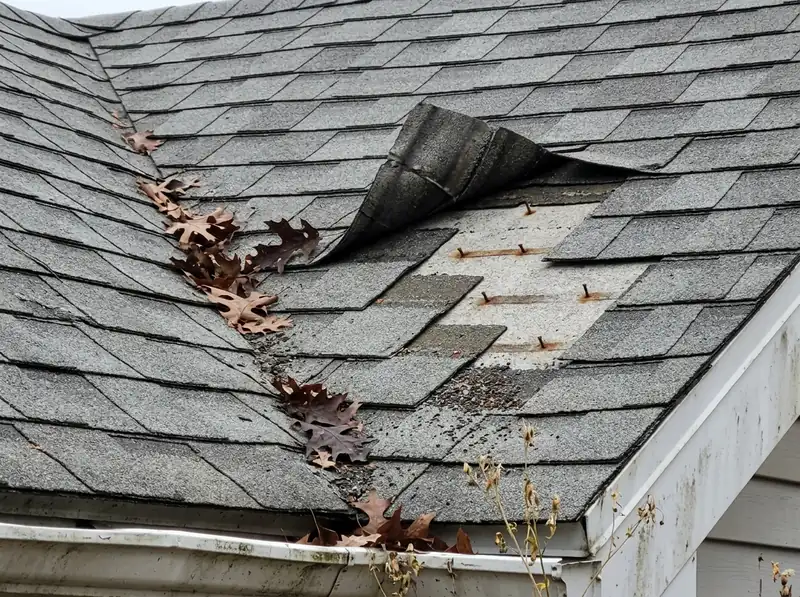
| High wind / nor’easter | Lifts and tears shingles, breaks their seal strips, peels ridge caps and edges | Shingles or pieces in the yard, missing ridge caps, exposed nails or dark patches on the roof |
| Wind-driven rain | Pushes water under shingles and flashing at edges and walls | New ceiling stains after the storm, wet attic near walls |
| Hail | Bruises shingles, knocks granules off, dents metal | Dents in gutters, vents and downspouts; round dark spots on shingles; granules piled at downspouts |
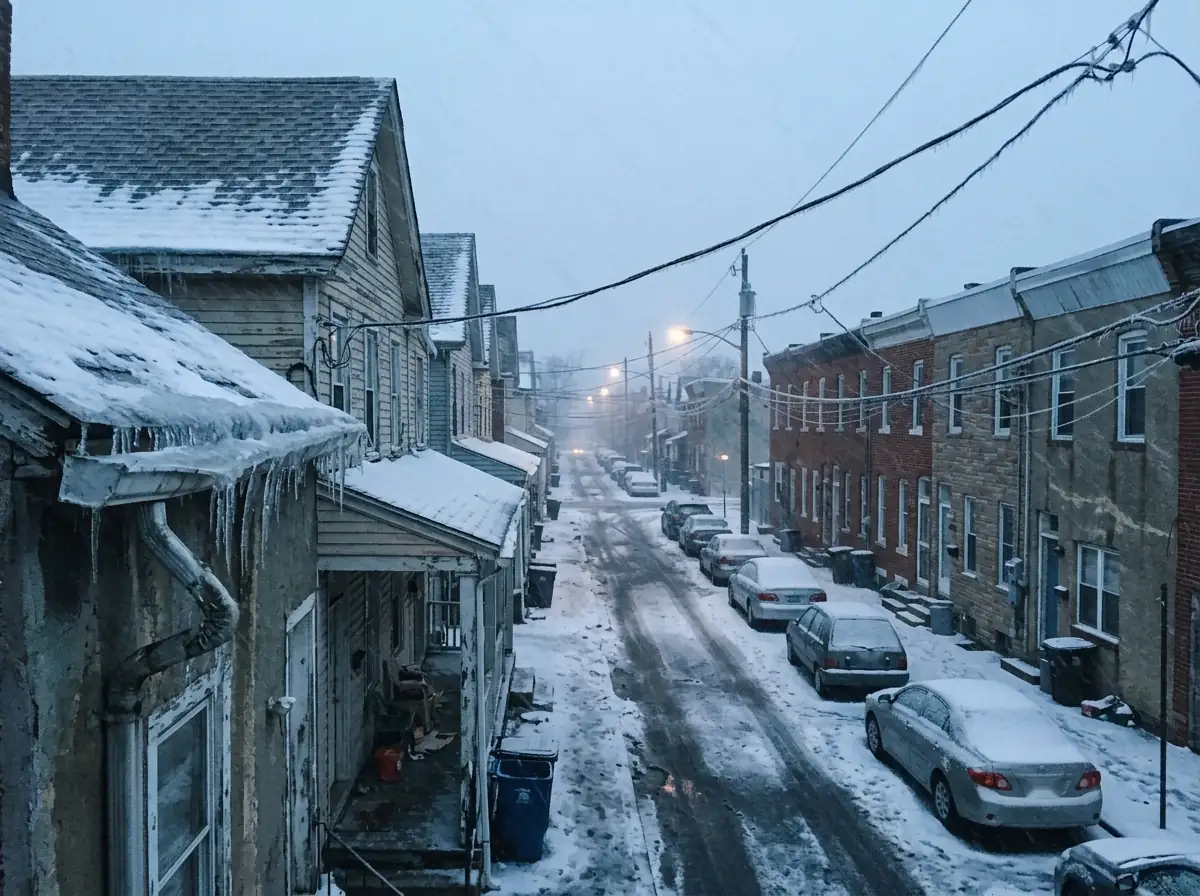
| Snow and ice | Ice dams, heavy loads on flat roofs, gutters pulled loose | Icicles, water stains near outside walls, sagging gutters |
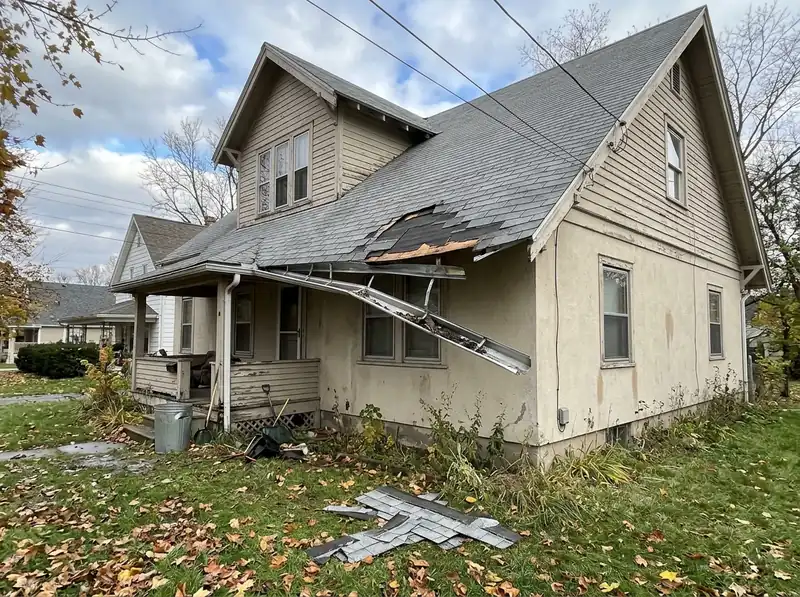
| Falling limbs and debris | Punctures, cracked shingles, broken flashing, damaged gutters | Branches on the roof, scrapes and holes, bent flashing |
| Tropical-storm downpours | Overwhelms drains and valleys, floods flat roofs | Ponding, overflowing gutters, leaks at valleys and porch roofs |
How can I check my roof for storm damage without climbing on it?
Stay on the ground. Many storm injuries happen on ladders and wet roofs. Instead:
- Walk around the house and look for shingles, pieces of flashing or ridge caps in the yard.
- Use binoculars or a phone camera’s zoom to scan the roof for missing shingles, lifted edges and dark patches.
- Check gutters and downspouts for dents and piles of granules.
- Look at metal vents, chimney caps and air-conditioning units for dents, a common hail sign.
- Go into the attic with a flashlight and look for daylight, wet wood or damp insulation.
- Check ceilings and walls on the top floor for new stains.
- Photograph everything with the date, before anything is moved or repaired.
If you see damage, or the storm was severe and you’re not sure, have a roofer look before the next storm. New stains inside? See roof leak repair for tracing the source.
How much wind can a shingle roof take?
It depends on the shingle and how it was installed. Shingles are tested and rated for wind, and many architectural shingles carry a 110 mph wind rating (ASTM D3161 Class F) or higher when installed to the manufacturer’s instructions. In practice, roofs fail at much lower speeds when shingles are old, their seal strips have weakened, nails were placed wrong, or the edges weren’t sealed. That’s why the same storm strips one roof on a street and leaves the next one untouched.
How does a roof insurance claim work in New Jersey?
Most storm roof claims follow the same path. Knowing it ahead of time helps you avoid the mistakes that shrink or sink a claim:
- Document the damage with dated photos and video, outside from the ground and inside, before any repair.
- Prevent further damage. Policies generally expect you to take reasonable steps, like a tarp. Keep every receipt.
- Report the claim promptly to your insurer. Check your policy for its notice requirements.
- The adjuster inspects the roof, often within days or weeks of a big storm. You can have your roofer there to point out damage.
- You get the insurer’s estimate listing what they’ll pay for. Compare it with a roofer’s written assessment.
- Payment usually comes in stages on replacement-cost policies: first the actual cash value, then the held-back depreciation after the work is done.
- If damage turns up during the repair that wasn’t in the estimate, the roofer documents it and a supplement is requested from the insurer.
What’s the difference between actual cash value and replacement cost?
It decides how much of your roof the insurer actually pays for:
| Actual cash value (ACV) | Replacement cost (RCV) | |
|---|---|---|
| What it pays | Cost to repair or replace, minus depreciation for the roof’s age | Full cost to repair or replace with similar materials |
| On an older roof | Can be a small fraction of the repair cost | Covers the work, less your deductible |
| How it’s paid | One payment | Usually ACV first, the rest after the work is completed |
| Where to find it | The declarations page or roof endorsement of your policy | Same; some policies switch older roofs to ACV |
Many insurers now limit coverage on older roofs, so check your declarations page before a storm, not after.
Does my policy have a separate wind or hurricane deductible?
Some New Jersey homeowners policies do, often set as a percentage of the home’s insured value rather than a flat amount, and it may only apply to certain named storms. It’s listed on your declarations page; ask your agent when it applies.
What if my roof claim is denied or the payout seems too low?
Don’t accept a verbal answer. In New Jersey you have several options:
- Ask for the denial or estimate in writing, with the policy language it’s based on.
- Get an independent written assessment with photos from a roofer.
- Request a re-inspection, with your roofer present.
- Check your policy’s appraisal clause, which lets each side name an appraiser when you disagree on the amount.
- Consider a public adjuster. Public adjusters work for you, not the insurer, take a percentage of the claim, and must be licensed by the NJ Department of Banking and Insurance.
- File a complaint with the NJ Department of Banking and Insurance if you believe the claim was handled unfairly.
The most common reason roof claims are denied is that the insurer decides the damage is wear and tear rather than storm damage. Dated photos from right after the storm are your best evidence.
Can a storm-damaged roof be repaired, or does it need replacing?
Often it can be repaired: a few torn shingles, a lifted ridge cap or bent flashing are routine repairs. Replacement becomes likely when damage is spread across most of the roof, the shingles are old and brittle and break when lifted, or matching replacement shingles can’t be found. Discontinued shingles are common on older Elizabeth roofs; ask the roofer and your insurer how a mismatch will be handled before work starts. Storm damage to a rubber or flat roof? See flat roof repair. Flashing torn off a chimney? See chimney leak repair.
How soon after a storm should I have my roof checked?
As soon as it’s safe, ideally within days. Insurance policies require prompt notice, and photos taken right after the storm are the strongest proof the damage came from that storm. Hidden damage, like broken shingle seals or small punctures, tends to leak with the next rain or the next winter’s ice, by which time it’s harder to tie to a specific storm.
What storms damage roofs in Elizabeth?
Elizabeth sits between Newark Bay, the Arthur Kill and the Elizabeth River, open to coastal storms and the wind that comes with them. The big ones in recent memory:
- Superstorm Sandy (October 2012): damaging wind and widespread power outages across North Jersey.
- Ida’s remnants (September 2021): extreme rainfall that overwhelmed drains and flooded parts of the city.
- Nor’easters most winters: sustained wind, sideways rain, sleet and heavy snow, the most common cause of storm roof damage here.
- Summer thunderstorms: sudden downbursts and occasional hail.
| Area | Storm exposure |
|---|---|
| Elizabethport and Bayway | Wind off Newark Bay and the Arthur Kill; salt air on flashing and fasteners |
| North End and Elmora | Mature street trees; falling limbs during wind and ice storms |
| Midtown | Flat roofs on brick buildings; ponding and drain overflow in downpours |
| Westminster | Cape Cods prone to ice dams after snowstorms |
See all our services on roof repair in Elizabeth.
Storm damage FAQ
Do I have to use the roofer my insurance company recommends?
Generally no. You can usually choose your own contractor. Check your policy and talk to your adjuster, and make sure whoever you hire is registered as a NJ Home Improvement Contractor.
Will filing a roof claim raise my premium?
It can. Claims history is one of the factors insurers use. Ask your agent how a claim may affect your policy, and weigh that against the size of the damage and your deductible.
Is hail damage common in Elizabeth?
Less common than in the Midwest, but summer thunderstorms do bring hail to North Jersey. Dents in gutters, vents and AC units are the easiest signs to spot from the ground.
Should my roofer meet the insurance adjuster?
It often helps. A roofer can point out damage the adjuster might miss, like broken seal strips or soft decking. It’s your choice, and you can attend too.
How long do I have to file a roof insurance claim?
It depends on your policy; check the notice and claim-filing requirements in your policy documents. In practice, report as soon as you find the damage, while the storm is easy to connect to it.
My roof leaked weeks after a storm. Can it still be storm damage?
Yes. Wind can break shingle seals or loosen flashing without an immediate leak. Photos from right after the storm and the storm date help show the link. Report it promptly once you find it.
Updated October 2026 · Written by the Roof Repair Prime Editorial Team · Contact: info@roofrepairprime.com · Privacy Policy · Terms