Flat Roof Repair in Elizabeth, NJ
Rubber roofs on rowhouses, flat roofs over rear additions and porches, low-slope roofs on two-families and small apartment buildings. Call to get connected with an independent local roofer who works on flat roofs in Elizabeth.
Call (908) 555-0142For homes and small residential buildings you own in Elizabeth. Know your roof type? Mention it when you call.
What kind of flat roof do I have?
Most flat roofs on Elizabeth homes are one of four types. You can usually tell which from a window or the roof hatch:
| Roof type | How to recognize it | Common problems |
|---|---|---|
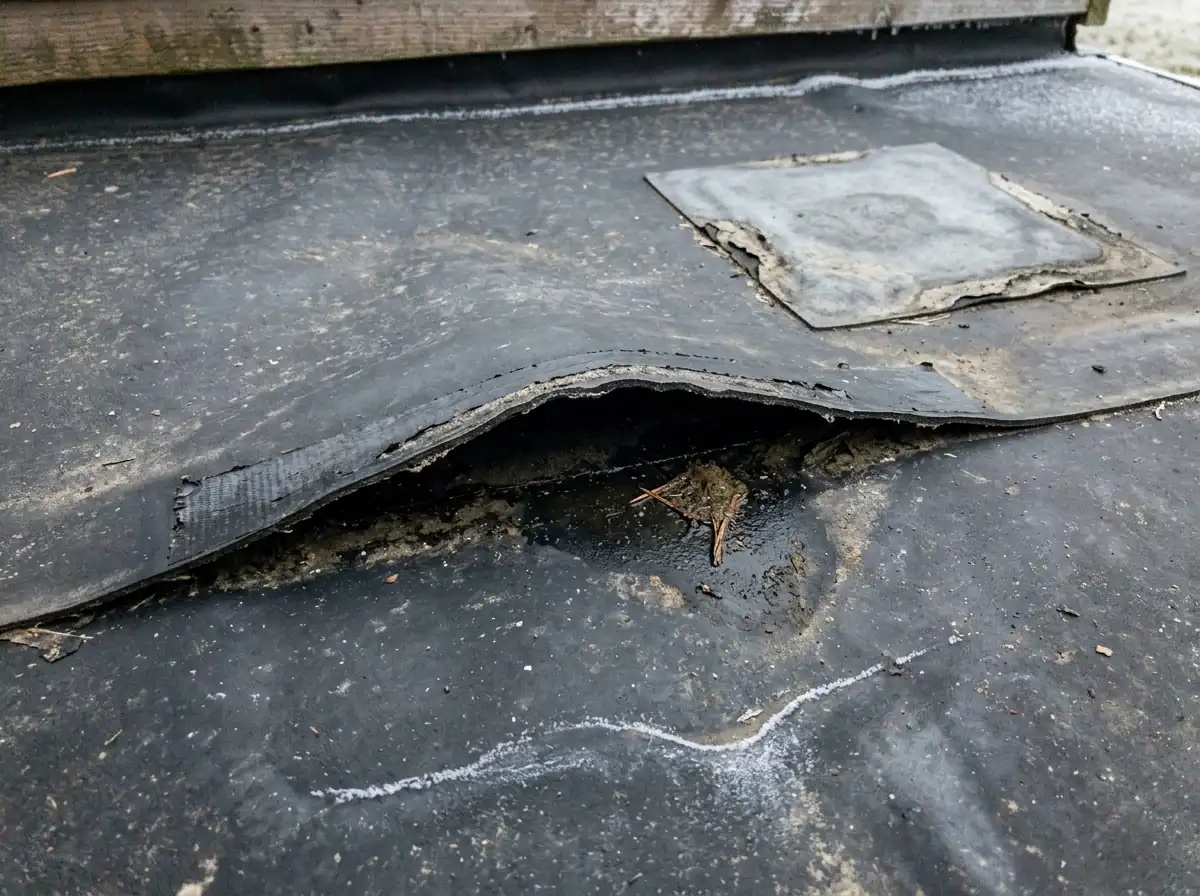
| EPDM (rubber) | Black, smooth, rubbery sheet; seams look like glued or taped overlaps | Seams letting go, shrinking at the edges, punctures |
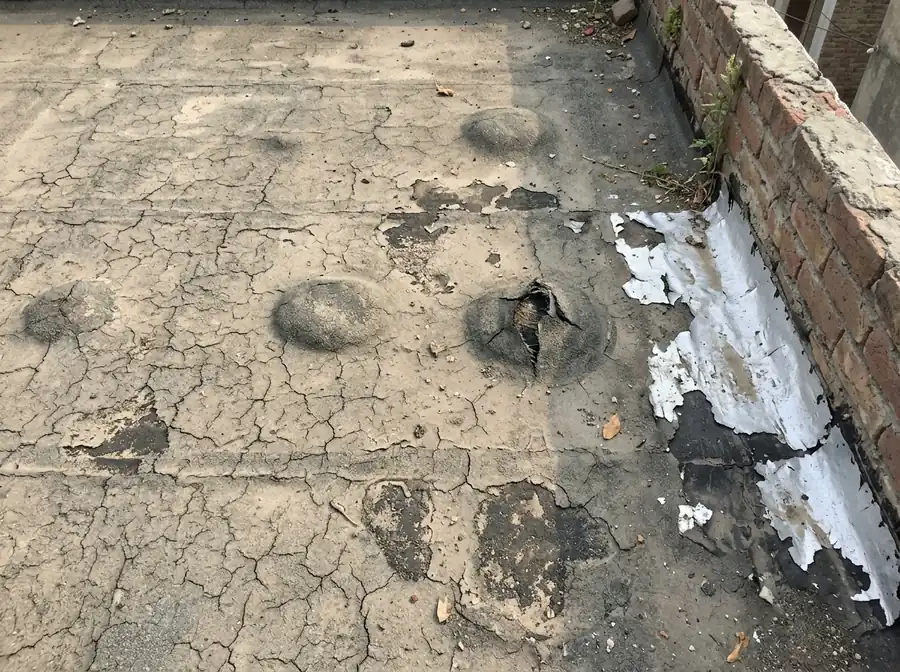
| Modified bitumen | Rolled sheets, often with a gritty granule surface or painted silver; overlaps every few feet | Blisters, cracked or alligatored surface, open laps, worn coating |
| Built-up (tar and gravel) | Gravel embedded in black tar, thick and heavy; common on older buildings | Bare spots where gravel washed off, cracking, blistering |
| TPO or PVC | White or light gray smooth sheet with heat-welded seams; newer roofs | Seam failures, punctures, flashing at edges |
Many older Elizabeth rowhouses also have a coating (silver, white or aluminum paint) over modified bitumen or tar. A coating protects a roof from sun; it doesn’t make a failed roof watertight.
Where do flat roofs leak?
Flat roofs leak at their edges and openings far more often than in the middle. These are the spots to point out to a roofer:
- Seams and laps where sheets overlap, especially on rubber roofs.
- Parapet walls and the flashing where the roof turns up the wall. Brick parapets on Elizabeth rowhouses also leak through cracked coping and mortar.
- Drains, scuppers and gutters. A clogged drain turns the roof into a pool.
- Penetrations: vent pipes, exhaust fans, skylights and the curb of a rooftop AC unit.
- Where the flat roof meets a pitched roof or wall, like a rear addition against the main house or a porch roof against the front wall.
- Blisters and cracks in modified bitumen and tar roofs.
- Damage from foot traffic: satellite, cable and HVAC installers often puncture flat roofs without knowing it.
What does ponding water do to a flat roof?
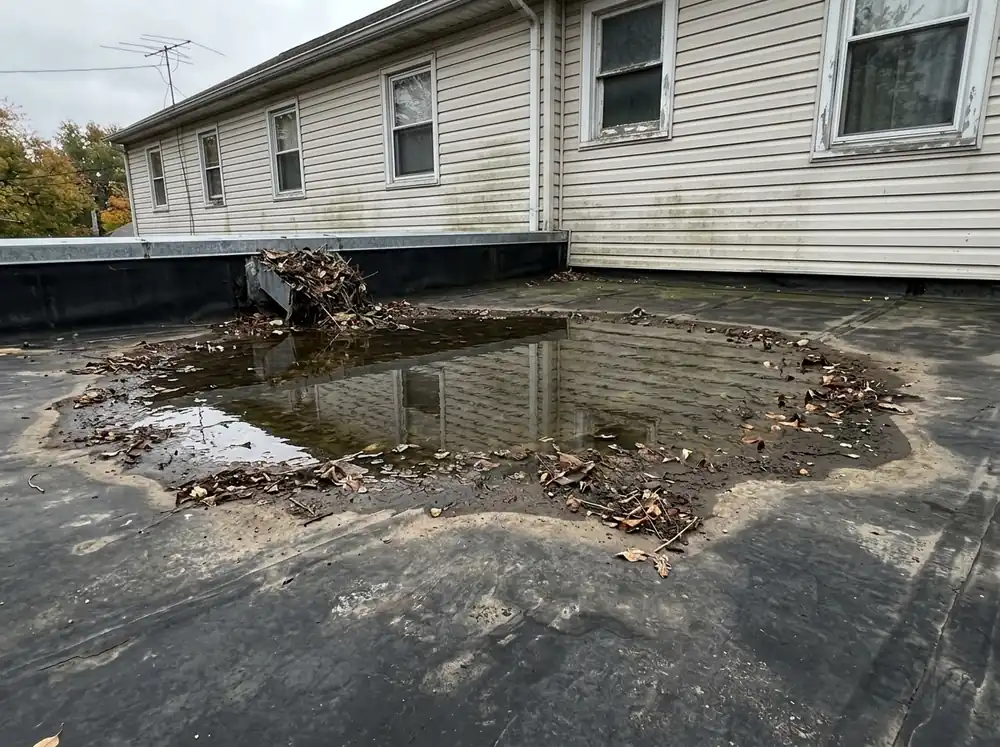
Ponding water is water still sitting on the roof about 48 hours after rain stops. Flat roofs are built with a slight slope so water drains; ponding means a low spot, a sagging deck or a blocked drain. It matters because:
- It finds every weak seam. Standing water keeps constant pressure on laps and flashing.
- It freezes in winter, expanding in cracks and opening them wider each cycle.
- It adds weight that can make a sag worse over time.
- It wears out coatings and membranes faster, and many manufacturers’ warranties exclude damage from ponding.
Small puddles that dry within a day or two are normal. Large areas that stay wet need a roofer to find out why. If a flat roof is flooding during a storm, see emergency roof repair.
Should a flat roof be patched, coated, recovered or replaced?
It depends on how much of the roof is failing and whether the layers underneath are wet. This is how the four options usually compare:
| Option | What it is | Usually fits when… | Usually doesn’t fit when… |
|---|---|---|---|
| Patch / spot repair | Repairing a seam, blister, puncture or flashing | The leak is in one spot and the rest of the roof is sound | Leaks keep appearing in new places |
| Coating | A liquid coating rolled over the whole roof | The roof is dry, sound and mostly watertight | The roof is already leaking or wet underneath |
| Recover | A new membrane installed over the existing roof | One sound, dry layer is in place | There are already two layers, or the insulation is wet |
| Replacement (tear-off) | Removing the old roof down to the deck and starting over | The membrane is failing widely, the deck is soft, or there are multiple layers | Only one area is damaged |
Building codes generally don’t allow a new roof over two or more existing layers, and putting a new layer over wet insulation traps the water in. Ask the roofer whether the roof is wet underneath before deciding.
Will a roof coating fix my leaking flat roof?
Usually not on its own. Coatings are made to protect and extend a roof that is still sound, by reflecting sun and sealing small surface cracks. If the roof is already leaking, water is getting under the membrane through a seam, flashing or hole, and a coating on top won’t seal that path. Coating over a wet roof can also trap moisture. Fix the leak first; coat afterward if the roof is otherwise in good shape. Homeowners online often report a coating that “didn’t work”; this is usually why.
How do roofers find a leak on a flat roof?
Because water travels under the membrane, roofers usually check more than the spot above the stain:
- Inspect seams, flashing, drains and penetrations closest to the leak and uphill of it.
- Look for blisters, soft spots and cracks by walking the roof carefully and pressing the surface.
- Check the parapet walls, including the coping and mortar, which can leak into the wall below.
- Use a moisture meter or infrared camera to map wet areas under the membrane.
- Take a small core sample if needed to see whether the insulation underneath is wet.
Ask for photos of the leak source and the wet area so you know what’s being repaired. For leaks on pitched roofs, see roof leak repair.
Who is responsible for a flat roof on attached rowhouses or a two-family?
It usually depends on who owns which part of the building. In attached rowhouses, each owner typically owns the roof over their own unit, but the roofs connect at shared parapet walls and seams, and a leak at the joint can come from either side. In a two-family owned by one person, the owner is responsible for the whole roof, including leaks into a tenant’s unit. In condos, the master deed or association rules usually decide.
If your leak is near a shared wall, talk to your neighbor before the repair. Fixing only your half of a shared seam often fails, and coordinating one repair is usually simpler for both owners. This is general information, not legal advice.
How do you take care of a flat roof?
- Clear drains, scuppers and gutters in spring and fall, and after big storms.
- Get it looked at after winter, when freeze-thaw damage shows up.
- Keep foot traffic off it. Ask HVAC, cable and satellite installers to protect the roof and tell you if they cut into it.
- Trim overhanging branches so leaves and limbs don’t land on it.
- Watch for ponding and new blisters, and photograph changes over time.
- Recoat on schedule if your roof has a coating, before it wears through.
Storm tore the membrane? See storm damage roof repair.
Where are flat roofs common in Elizabeth?
| Area | Typical flat or low-slope roofs |
|---|---|
| Midtown | Brick multi-family buildings and rowhouses with parapet walls |
| Elizabethport | Older attached rowhouses and small apartment buildings near the water |
| Peterstown | Low-pitch roofs and flat rear additions on narrow two-families |
| Citywide | Porch roofs, rear kitchen additions, garages and dormer tops |
For pitched roofs and everything else, see roof repair in Elizabeth.
Flat roof repair FAQ
Is some water on a flat roof normal?
Small puddles that dry within about 48 hours are normal. Water that sits longer means a low spot, a sag or a blocked drain, and it shortens the roof’s life.
How long does a rubber (EPDM) roof last?
A well-installed EPDM roof often lasts around two decades or more. Seams, flashing and edges usually need attention before the membrane itself wears out, so regular checks extend its life.
Can I walk on my flat roof?
Only when you have to, on dry days, in soft-soled shoes, and away from the edges. Foot traffic causes punctures and cracks, especially on older roofs. Never go up when it’s wet, icy or windy.
Why is my top-floor ceiling wet when it hasn’t rained?
It could be condensation inside the roof, a leaking rooftop AC drain, or plumbing. Water can also stay trapped under a flat roof for days after rain and keep dripping. A roofer can check whether the roof is wet underneath.
Do I need a permit for flat roof repair in Elizabeth?
Roof covering repairs on detached one- and two-family homes are ordinary maintenance in New Jersey. Attached rowhouses, multi-family buildings and any structural or deck work can need a permit; check with the City of Elizabeth’s construction office.
Can a flat roof be turned into a pitched roof?
Sometimes, but it’s a structural project, not a repair. It needs an engineer or architect, a building permit and often zoning review. Most owners repair or replace the flat roof instead.
Updated October 2026 · Written by the Roof Repair Prime Editorial Team · Contact: info@roofrepairprime.com · Privacy Policy · Terms