Chimney Leak & Flashing Repair in Elizabeth, NJ
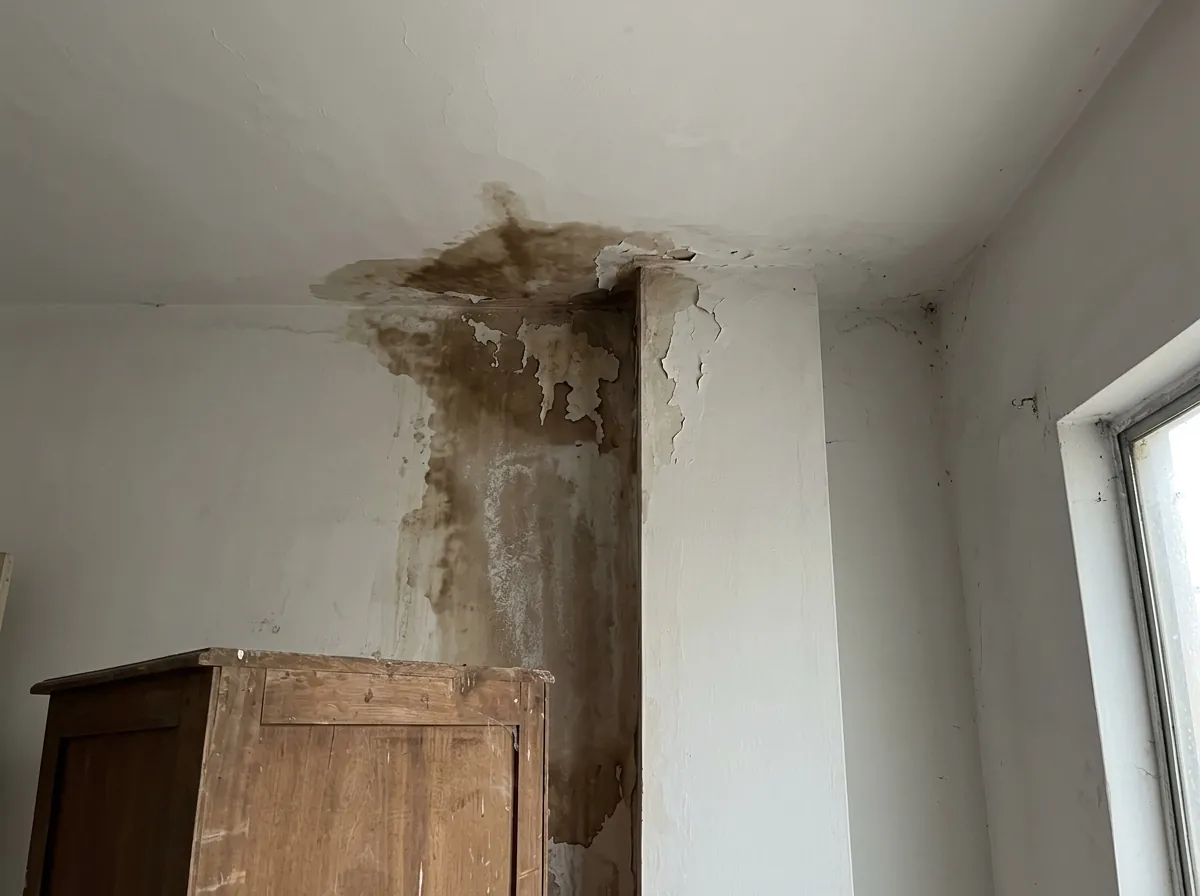
A stain on the ceiling next to the chimney, water in the fireplace, peeling paint on the chimney wall. Call to get connected with an independent local roofer who repairs chimney flashing and the leaks where a chimney meets the roof.
Call (908) 555-0142For homes you own in Elizabeth. Tell us where the water shows up: ceiling, wall, attic or fireplace.
Is it the chimney or the roof that’s leaking?
Some clues point clearly to the chimney:
| What you notice | Likely chimney cause |
|---|---|
| A stain on the ceiling or wall right beside the chimney | Failed step or counter flashing where the chimney meets the roof |
| Water in the fireplace or around the damper | Missing or damaged chimney cap, or a cracked crown letting rain down the flue |
| White, chalky deposits on brick inside the house or attic | Water moving through the brick and mortar (efflorescence) |
| Water running down the sides of the chimney in the attic | Flashing failure or water soaking through the masonry above the roof |
| Leaks only in hard, wind-driven rain from one direction | Water driven against the chimney’s uphill side or into worn mortar |
| Rusty damper or firebox, musty smell from the fireplace | Long-term water entry from the top of the chimney |
If the stain is several feet away from the chimney, the source may be elsewhere; see our roof leak repair page for how leaks travel.
Which parts of a chimney leak?
A chimney keeps water out with several parts working together. Any one of them can fail:
| Part | What it does | How it fails |
|---|---|---|
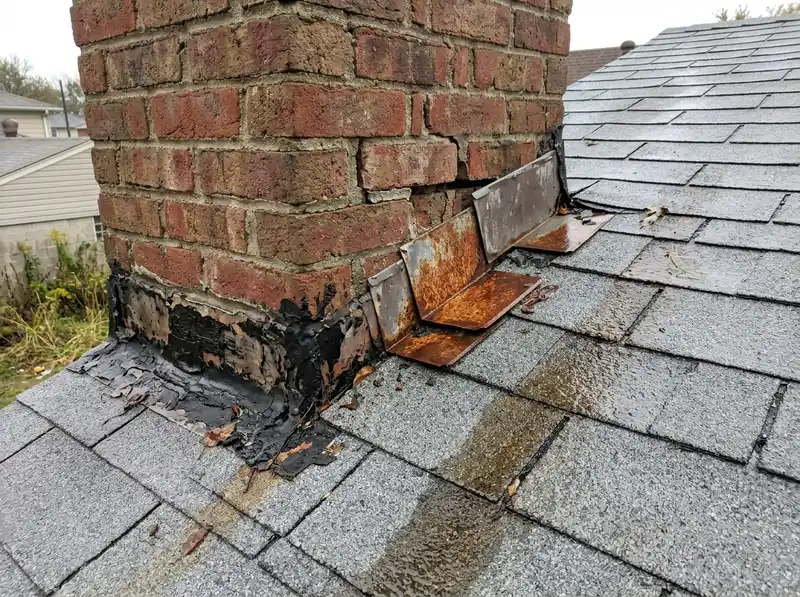
| Step flashing | L-shaped metal pieces woven in with each course of shingles along the chimney’s sides | Rusts, lifts, or was never woven in; sealed with tar instead |
| Counter flashing | Metal set into the mortar joints, lapping over the step flashing | Pulls out of the joint, or was only glued to the brick face with caulk |
| Cricket (saddle) | A small peaked roof behind the chimney that splits water around it | Missing on wide chimneys, so water and ice pile up behind it |
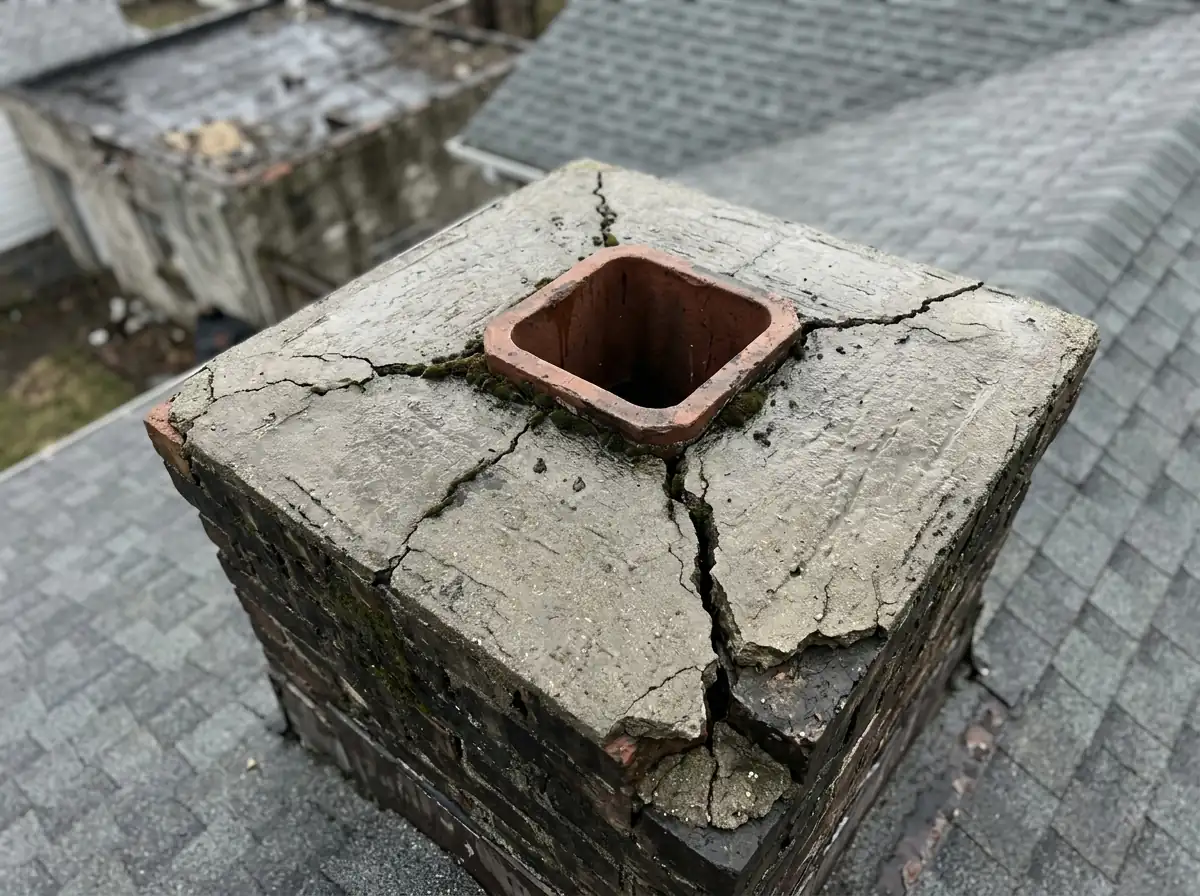
| Crown | The concrete or mortar slab on top of the chimney | Cracks from freeze-thaw and lets water into the brick |
| Cap | The metal cover over the flue opening | Missing or damaged, so rain goes straight down the flue |
| Brick and mortar | The chimney itself | Mortar joints erode and bricks absorb water and flake (spalling) |
Why does chimney flashing fail on older Elizabeth homes?
Most chimneys in Elizabeth’s pre-war two-families, Tudors and Colonials have been through decades of freeze-thaw winters and several re-roofs. The usual reasons flashing fails:
- Old flashing reused during a re-roof. New shingles go on, but the rusted flashing around the chimney stays.
- Tar instead of metal. Roof cement smeared around the chimney base looks sealed but cracks and pulls away within a season or two.
- Counter flashing glued to the brick face with caulk instead of being set into a cut mortar joint.
- Eroded mortar joints that let water soak in behind the counter flashing.
- No cricket behind a wide chimney, so water, leaves and snow pile up on the uphill side.
- Settling that opens a gap between the chimney and the roof framing.
What does a proper chimney flashing repair look like?
A lasting chimney repair uses metal, overlapped so water always runs down and away. Caulk and tar are only backups. Here’s the difference:
| Proper flashing | Shortcut that leaks again |
|---|---|
| Step flashing pieces woven in with each course of shingles | One long piece of metal, or none, with tar along the side |
| Counter flashing set into a groove cut in the mortar joint, then sealed | Counter flashing glued or screwed to the brick face with caulk |
| A cricket on the uphill side of a wide chimney | Flat roof surface behind the chimney where water pools |
| Apron flashing across the downhill face, lapped over the shingles | Shingles butted against the brick and sealed with cement |
| Eroded mortar repaired before new flashing goes in | New flashing set into crumbling joints |
Ask for photos of the flashing before and after the repair.
Does my chimney need a cricket?
If the chimney is wide, probably. Building codes generally require a cricket (also called a saddle) on the uphill side of a chimney more than 30 inches wide. Without one, water, ice and leaves collect against the back of the chimney, which is one of the most common leak spots on older roofs. A cricket is usually added when the flashing is replaced or the roof is redone.
What’s the difference between a chimney cap and a chimney crown?
The crown is the solid concrete or mortar top of the chimney that sheds water off the brick. The cap is the metal cover, often with mesh sides, that sits over the flue opening to keep rain, animals and debris out. A cracked crown lets water into the masonry; a missing cap lets rain straight down the flue into the fireplace or appliance connection. Both are common sources of water in the fireplace.
Do I need a roofer or a mason for a chimney leak?
It depends on which part failed. Roofers typically handle flashing, crickets and everything where the chimney meets the roof. Masons or chimney professionals typically handle crown rebuilds, repointing mortar, rebuilding damaged brick, chimney caps and flue liners. Many leaks need a bit of both, and some roofers do both. When you call, describe where the water shows up so the roofer you’re connected with can tell you which parts they handle.
If the chimney serves a furnace, boiler, water heater or fireplace, also have it inspected for safety: the National Fire Protection Association recommends a yearly chimney inspection.
What about an old chimney that isn’t used anymore?
Many older Elizabeth homes have chimneys left over from coal or oil heat that no longer vent anything. Unused chimneys still need flashing and a cap, and they often get ignored until they leak. Some owners choose to cap and seal them, or remove them below the roofline and roof over the opening. Removal is structural work: check with the City of Elizabeth’s construction office about permits first, and make sure no appliance still vents into it.
Chimney leaks across Elizabeth neighborhoods
| Neighborhood | Typical chimneys | What to watch |
|---|---|---|
| North End | Large brick chimneys on Tudors and Colonials, some on slate roofs | Copper or metal flashing on slate, crowns, crickets on wide chimneys |
| Elmora | Brick chimneys on older two-families | Tar-patched flashing from past re-roofs, eroded mortar |
| Westminster | Chimneys on Cape Cods and Colonials | Ice building up behind the chimney, step flashing at the sides |
| Citywide | Unused chimneys from old coal or oil heat | Missing caps, crumbling crowns, forgotten flashing |
Storm tore the flashing off? See emergency roof repair or storm damage roof repair. For everything else, see roof repair in Elizabeth.
Chimney leak FAQ
Can chimney flashing be fixed without replacing the whole roof?
Usually yes. Step, counter and apron flashing can be replaced around the chimney by removing and re-laying the shingles next to it. If the roof is near the end of its life anyway, it can make sense to redo the flashing with the new roof.
How long should chimney flashing last?
Properly installed metal flashing often lasts as long as the roof around it, or longer. Tar or caulk patches are a different story: they typically crack and pull away within a season or two.
Why does my chimney only leak in heavy rain?
Hard, wind-driven rain hits the chimney’s sides and back and gets into small gaps that normal rain misses: worn mortar, a loose counter flashing, or the area behind a chimney with no cricket.
Is a leaking chimney dangerous?
The water itself damages wood framing, plaster and the fireplace. If the chimney vents a furnace, boiler or water heater, water can also damage the flue, so have it inspected before relying on it. The NFPA recommends a yearly chimney inspection.
Does homeowners insurance cover a chimney leak?
Usually not when it’s from worn flashing or mortar, which insurers treat as maintenance. Damage from a sudden event, like wind tearing off flashing or a tree hitting the chimney, may be covered. Photograph the damage before any repair.
Will sealing the brick stop the leak?
Only if water is soaking through the brick itself. A breathable masonry water repellent can help, but it won’t fix failed flashing, a cracked crown or a missing cap, which cause most chimney leaks.
Updated October 2026 · Written by the Roof Repair Prime Editorial Team · Contact: info@roofrepairprime.com · Privacy Policy · Terms